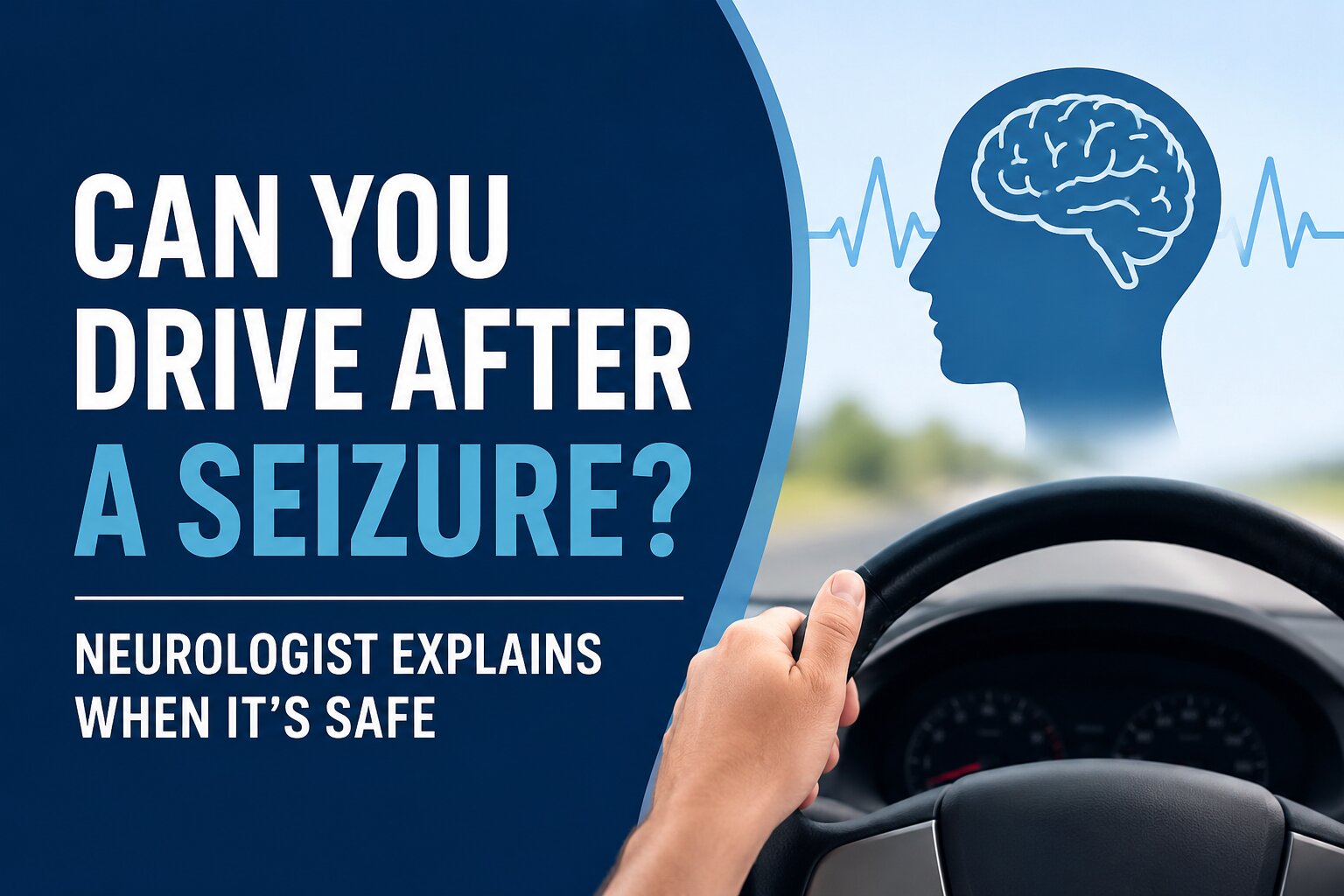
Can You Drive After a Seizure? Neurologist Explains When It's Safe
One of the first questions people ask after a seizure isn't about medication or test results. It's much more practical:
"Can I drive?"
It's an understandable concern. Driving isn't just about getting from one place to another. It's how many people get to work, take their children to school, buy groceries, or simply maintain their independence. Losing that ability, even temporarily, can feel overwhelming.
The honest answer is that you should not drive immediately after a seizure. Whether you can drive again depends on several factors, including why the seizure happened, whether it's likely to happen again, how well it's controlled, and the driving regulations where you live. A neurologist can help determine when it's medically appropriate to return to the road, but legal requirements also vary by state.
Why is driving after a seizure treated differently
Not every medical condition affects driving in the same way.
Someone recovering from a broken arm may still be able to drive once they can safely control the steering wheel. A seizure is different because it can occur suddenly and interfere with awareness, judgment, movement, or consciousness.
That's what makes driving after a seizure a serious safety issue.
A seizure behind the wheel doesn't just put the driver at risk. It can endanger passengers, pedestrians, cyclists, and other motorists. For that reason, every state has rules designed to reduce the chances of someone experiencing another seizure while driving.
Those rules aren't intended to punish people with seizures. They're meant to balance personal independence with public safety.
Can you drive after a seizure if you feel completely fine?
This is where many people become confused.
It's common to feel normal shortly after recovering from a seizure. You may be thinking clearly, walking normally, and eager to return to your routine. That doesn't necessarily mean it's safe to drive.
The bigger question isn't how you feel today. It's whether another seizure could happen without warning.
For someone who has had a first seizure, doctors often need time to determine why it occurred. Was it triggered by high fever, low blood sugar, medication, alcohol withdrawal, sleep deprivation, or another temporary cause? Or could it be the beginning of epilepsy?
Until that question is answered, driving is usually restricted.
When can you drive after a seizure?
There isn't a single timeline that applies to everyone.
The answer depends on several medical and legal factors, including:
Whether it was your first seizure
The underlying cause
Results of neurological testing
Whether you've been diagnosed with epilepsy
How well seizures are controlled with treatment
Your state's driving regulations
Some people may be eligible to drive again after remaining seizure-free for several months. Others may need a longer seizure-free period before their driving privileges can be restored.
That's why asking "when can you drive after a seizure?" doesn't have a universal answer. The decision is individualized and should always involve your treating neurologist.
What if you've been diagnosed with epilepsy?
A diagnosis of epilepsy doesn't automatically mean you'll never drive again.
Many people with epilepsy continue to drive safely for years because their seizures are well controlled with medication or other treatment.
The key is seizure control.
If treatment successfully prevents seizures for the period required under your state's regulations, many individuals can legally resume driving. Your neurologist will monitor your progress, adjust medications if needed, and document your medical status when appropriate.
The relationship between epilepsy and driving is often misunderstood. People sometimes assume epilepsy permanently ends someone's ability to drive. In reality, many individuals regain their driving privileges after meeting medical and legal requirements.
Your neurologist looks at more than one test
Patients often expect one scan or one EEG to provide a simple answer.
Neurology rarely works that way. Your doctor considers the entire picture:
Your medical history
Details of the seizure itself
Whether anyone witnessed the event
Brain imaging results
EEG findings
Family history
Current medications
Other health conditions
Even normal test results don't always eliminate the possibility of another seizure. Likewise, an abnormal EEG doesn't always mean another seizure is certain.
This is why follow-up appointments matter. The decision about returning to driving is based on trends over time, not just a single office visit.
Some situations carry a lower risk than others
Not every seizure has the same cause.
For example, a seizure triggered by a temporary medical problem that has been successfully treated may carry a different long-term risk than seizures caused by epilepsy.
Similarly, some people experience seizures only under very specific circumstances, while others have no warning at all.
These differences affect both treatment decisions and recommendations about driving.
Your neurologist's role is to evaluate your individual level of risk rather than rely on a one-size-fits-all rule.
Practical steps while you're waiting
Temporary driving restrictions can be frustrating, but they're usually only one part of your recovery.
During this period, it helps to focus on reducing the chances of another seizure.
That often means taking medications exactly as prescribed, getting consistent sleep, avoiding known seizure triggers, attending follow-up appointments, and reporting any new symptoms promptly.
It's also worth planning. Family members, friends, rideshare services, or public transportation can make the temporary loss of driving less disruptive than many people initially expect.
Questions people often hesitate to ask.
Many patients worry about whether they should report a seizure to the licensing authority, whether their insurance could be affected, or whether they'll lose their driver's license permanently.
The answers depend on where they live.
Because driving laws differ from state to state, it's important not to rely on advice from friends, online forums, or social media. A recommendation that applies in one state may not apply in another.
Your neurologist can explain the medical side of the decision and help you understand how it relates to your state's requirements.
When it's time to schedule an evaluation
If you've experienced a seizure, whether it's your first or one of several—don't make decisions about driving on your own.
A thorough neurological evaluation can help determine why the seizure occurred, estimate the risk of another event, and guide the next steps in your recovery.
At Bansal Neuro- Ray of Hope, patients receive comprehensive neurological care, including evaluations for seizures and epilepsy, advanced diagnostic testing, and individualized treatment plans. The goal isn't simply to determine when you can drive again—it's to understand what's causing the seizures and help you manage the condition safely over the long term.
Frequently Asked Questions
Can you drive after a seizure?
Not immediately. Most people should avoid driving until they've been evaluated by a neurologist and meet their state's medical and legal requirements for returning to the road.
When can you drive after a seizure?
The timeline varies. It depends on the cause of the seizure, your risk of recurrence, seizure control, and the driving regulations where you live.
Can people with epilepsy drive?
Yes. Many people with epilepsy can drive once their seizures are well controlled and they satisfy the licensing requirements in their state.
Does one seizure mean you permanently lose your driver's license?
No. A single seizure does not automatically mean you'll never drive again. Many people regain driving privileges after appropriate evaluation, treatment, and a required seizure-free period.
Should I talk to a neurologist before driving again?
Absolutely. Your neurologist can assess your individual situation, review test results, discuss your seizure risk, and provide guidance about when returning to driving is medically appropriate.
If you've experienced a seizure or have questions about driving after a seizure, don't guess when it's safe to get back behind the wheel. A comprehensive neurological evaluation can help identify the cause of your seizure, assess your risk of recurrence, and provide personalized guidance based on your health and your state's driving requirements.
At Bansal Neuro – Ray of Hope, our neurology team is committed to helping patients understand their condition and make informed decisions about treatment, recovery, and returning to everyday activities safely.
Ready to take the next step? Contact Bansal Neuro – Ray of Hope to schedule an appointment with our team and receive expert neurological care tailored to your needs.
© 2026 A Ray of Hope Neurology and Psychiatry. All rights Reserved - Accessibility Statement - Privacy Policy - Sitemap
Managed and Designed by 

NOW ACCEPTING NEW PATIENTS
Child and Adolescent Psychiatry
Board-certified child psychiatrist with appointment openings now!
Call (847) 816-6335 Meet Christian Schmidt, MD