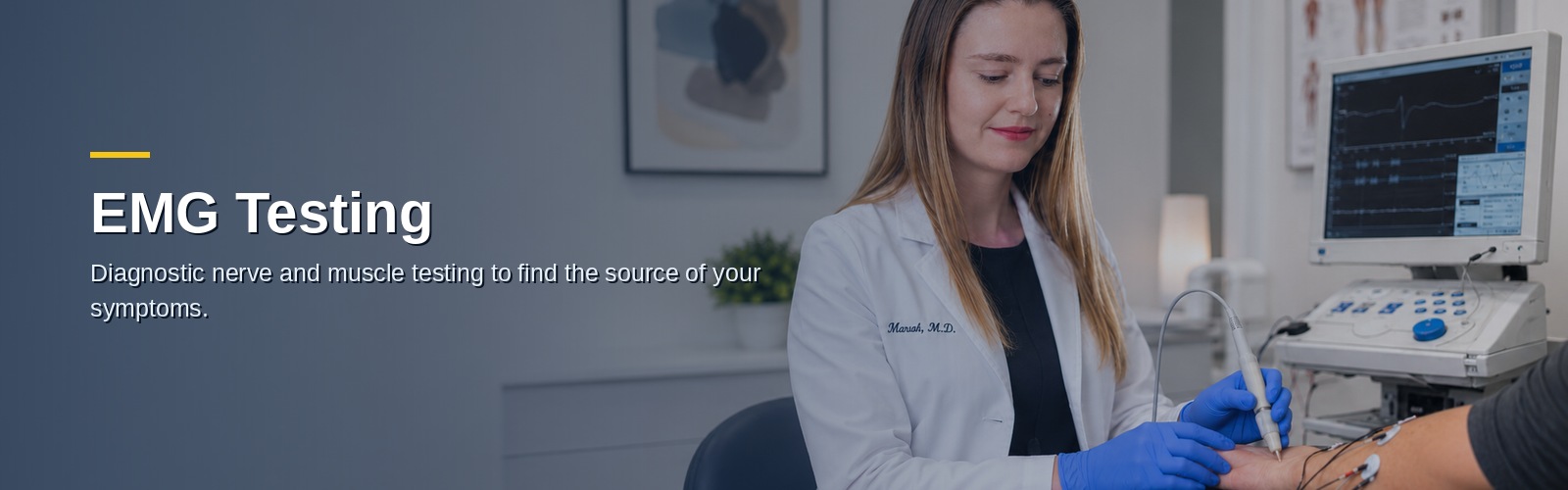
If you have been dealing with muscle weakness, numbness, tingling, or nerve pain, an EMG can help find out what is causing it. Electromyography (EMG) is a diagnostic test that measures how well your nerves and muscles are working together.
Our neurologists use EMG to get clear answers about symptoms that can be difficult to pin down, so your care can be guided by an accurate diagnosis rather than guesswork.
How EMG Works
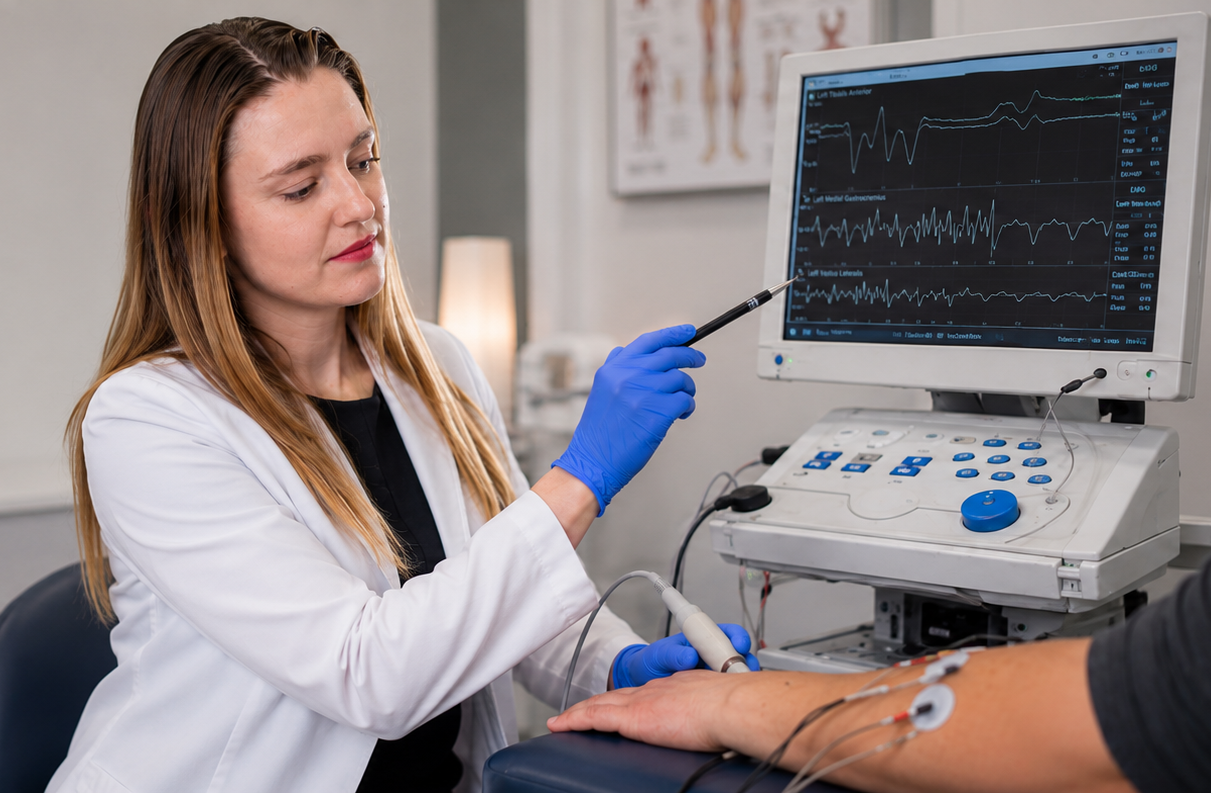
During an EMG, small electrodes are used to measure the electrical activity in your muscles and the nerves that control them. In many cases, a nerve conduction study is performed at the same time, which measures how quickly and effectively your nerves carry signals.
Together, these two tests give your neurologist a detailed picture of how your nerves and muscles are functioning, which helps confirm or rule out a diagnosis.
What EMG Can Help Diagnose
EMG testing helps our neurologists identify a range of nerve and muscle conditions, including:
Neuropathy, including diabetic neuropathy
Peripheral myopathy and muscle disorders
Pinched or damaged nerves
Carpal tunnel syndrome
Other neuromuscular conditions
Your provider will explain what your results mean and discuss the next steps for your care.

What to Expect During Your Test
Most EMG appointments are straightforward and take about thirty to sixty minutes, depending on how many areas are being tested. You may feel a mild sensation as the electrodes measure activity, but most people tolerate the test well.
There is no downtime afterward, so you can return to your normal activities the same day. Your neurologist will talk you through each step so you always know what to expect.
Why Choose A Ray of Hope
Testing performed and interpreted by experienced neurologists
Clear explanations of your results and what they mean
Coordinated care if further treatment is needed
Neurology, psychiatry, and therapy under one practice
A comfortable, patient-focused environment

Where We Offer EMG
EMG testing is available at our locations. If you would like to confirm which office is nearest you, give us a call and we can help.
If you have been referred for an EMG or are looking for answers about your symptoms, we are here to help you take the next step.
Ready to Schedule an EMG?
If your doctor has ordered nerve testing, or your numbness and weakness still have no explanation, call the office nearest you and we will get you scheduled.
Monday to Thursday 8 to 5, Friday 8 to 4. Phoenix 8 to 6, Friday until 4:30 MST.

© 2026 A Ray of Hope Neurology and Psychiatry. All rights Reserved - Accessibility Statement - Privacy Policy - Sitemap
Managed and Designed by 

NOW ACCEPTING NEW PATIENTS
Child and Adolescent Psychiatry
Board certified child psychiatrist with appointment openings now!
Call (847) 816-6335 Meet Christian Schmidt, MD