First Seizure in Adults: Diagnosis, Treatment, and Recovery Explained
For many people, the most difficult part of a first seizure is not only the event itself, but also the uncertainty that follows.
A few minutes of unusual movements, confusion, or loss of awareness can leave a person and their family searching for answers. What caused it? Could it happen again? Does this mean epilepsy? Will life change after this?
These are common concerns after a first seizure in adults. While a seizure can be alarming, one episode does not always mean a person has epilepsy or will continue to experience seizures. The next step is understanding what happened and looking for possible reasons behind it.
A neurological evaluation helps separate a one-time event caused by a temporary problem from a condition that may require ongoing care.
What Exactly Happens During a Seizure?
The brain relies on billions of nerve cells communicating through electrical signals. A seizure occurs when there is a sudden burst of abnormal electrical activity that temporarily affects how the brain functions.
The way a seizure appears depends on which areas of the brain are involved. Some people experience obvious symptoms, such as:
Rhythmic shaking or jerking movements
Stiffening of the body
Loss of consciousness
Confusion after the episode
Others may have less noticeable symptoms, including:
A brief period of staring or being unresponsive
Sudden unusual sensations or emotions
Difficulty speaking
Temporary memory loss
Repetitive movements they do not remember afterward
Because seizures can look different from person to person, understanding exactly what happened before, during, and after the episode becomes an important part of diagnosis.
Why Can Adults Have a First Seizure?
A seizure is not a disease by itself. It is a symptom that can occur for different reasons.
Sometimes, the cause is a temporary change affecting the brain. In other situations, it may point toward an underlying neurological condition.
Possible causes of a first seizure in adults include:
Previous head injury
Stroke or changes in brain blood flow
Brain infections
Structural changes in the brain
Brain tumors
Low blood sugar
Abnormal levels of minerals or electrolytes in the body
Certain medications
Alcohol withdrawal
Severe sleep deprivation
In some cases, doctors may not find one clear cause even after testing. This can feel frustrating, but it does not mean there are no answers. Neurologists use the available information to understand the level of risk and decide what monitoring or treatment may be appropriate.
The First Step: A Detailed Neurological Evaluation
After a seizure, the first medical assessment is not just about confirming that a seizure occurred. It is about understanding the circumstances around it.
A neurologist will usually ask detailed questions about the episode, including:
What was happening immediately before the seizure?
Did the person lose awareness?
How long did it last?
Were there specific movements or sensations?
How quickly did recovery happen?
Were there recent illnesses, injuries, medication changes, or lifestyle changes?
Often, the person who experienced the seizure may not remember the event clearly. Information from family members, friends, or anyone who witnessed it can provide important details.
A seizure evaluation is like putting together pieces of a puzzle. Each detail helps doctors understand what may have happened inside the brain.
Tests After a First Seizure in Adults
There is no single test that explains every seizure. Instead, doctors combine different evaluations to create a clearer picture.
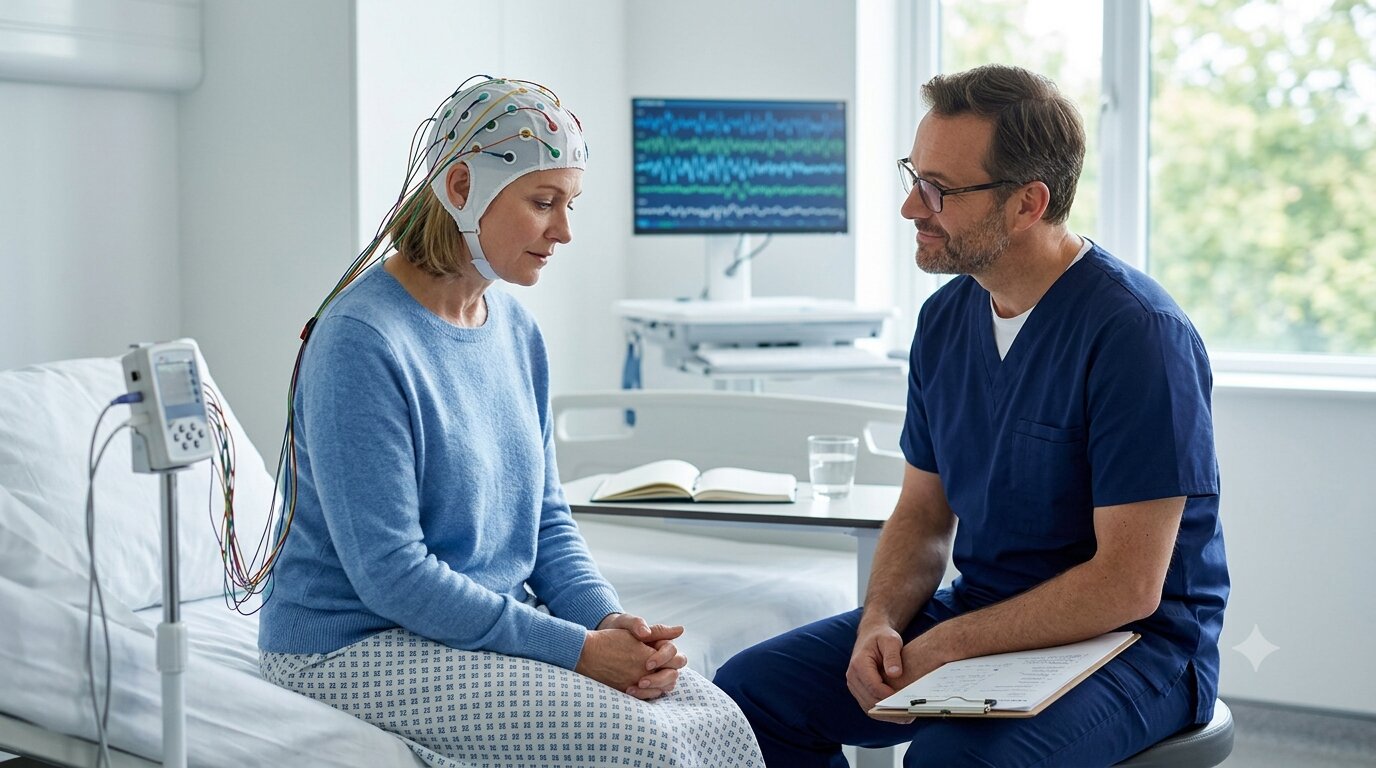
EEG: Looking at Brain Activity
An electroencephalogram (EEG) records electrical activity in the brain using small sensors placed on the scalp.
An EEG may show patterns that suggest an increased risk of future seizures. However, a normal EEG does not always rule out a seizure disorder. Doctors interpret the results along with symptoms, examination findings, and other tests.
MRI and Brain Imaging
Brain imaging helps identify physical changes that may have contributed to the seizure.
An MRI provides detailed images of brain structures and may help detect abnormalities that are not visible through a routine examination. In emergencies, a CT scan may also be used when doctors need quick information about possible bleeding or injury.
Blood Tests
Blood tests can help identify medical problems that may trigger seizures, such as:
Blood sugar abnormalities
Electrolyte changes
Signs of infection
Other metabolic issues
Finding these factors can sometimes change the entire approach to treatment.
Does a First Seizure Mean Epilepsy?
This is one of the biggest concerns after a seizure, and it is an important distinction.
A person can have a seizure without having epilepsy.
Epilepsy is a neurological condition where there is an increased tendency to have repeated unprovoked seizures. Doctors consider several factors before making this diagnosis, including seizure type, EEG findings, brain imaging results, and medical history.
For example, a seizure caused by low blood sugar or alcohol withdrawal may not carry the same long-term risk as a seizure linked to an underlying brain abnormality.
That is why jumping to conclusions after a first seizure can create unnecessary anxiety. Proper evaluation provides a more accurate picture.
Treatment Options and Recovery
Treatment after a first seizure depends on the reason behind it and the likelihood of another episode.
Some people may only need treatment for an underlying trigger. Others may benefit from anti-seizure medications if their evaluation suggests a higher risk of recurrence.
The decision is personalized. Doctors consider:
The cause of the seizure
EEG and MRI findings
Overall health
Possible benefits and side effects of medication
The person's daily activities and safety concerns
Recovery is also about returning to normal routines safely. Many people worry about work, exercise, travel, or driving after a seizure. These decisions depend on individual circumstances and local guidelines, so discussing them with a neurologist is important.
Simple habits can also support brain health and reduce avoidable risks:
Maintaining consistent sleep
Taking prescribed medications regularly
Avoiding excessive alcohol
Managing stress
Keeping follow-up appointments
When Should You Seek Emergency Care?
Some seizures require immediate medical attention.
Emergency help should be sought if:
A seizure lasts more than five minutes
Another seizure follows without recovery
The person has difficulty breathing
Consciousness does not return
A serious injury occurs
The seizure happens during pregnancy
It is the first known seizure
Early medical attention can help identify serious causes and ensure appropriate care begins quickly.
Finding Answers After a First Seizure
A first seizure can feel overwhelming, but it is also the beginning of understanding what happened.
The purpose of neurological evaluation is not simply to give a diagnosis; it is to explain why the seizure occurred and determine the safest path forward.
At Bansal Neuro, patients with seizure-related concerns undergo careful evaluation to understand their symptoms, identify possible causes, and receive guidance based on their individual situation.
For many adults, the uncertainty after a first seizure is the hardest part. With the right evaluation and medical support, that uncertainty can be replaced with clearer answers and a practical plan for moving ahead.
Experiencing a first seizure can be overwhelming. Get expert neurological guidance and understand your next steps. Schedule a consultation with Bansal Neuro today.
→Contact Us
© 2026 A Ray of Hope Neurology and Psychiatry. All rights Reserved - Accessibility Statement - Privacy Policy - Sitemap
Managed and Designed by 

NOW ACCEPTING NEW PATIENTS
Child and Adolescent Psychiatry
Board-certified child psychiatrist with appointment openings now!
Call (847) 816-6335 Meet Christian Schmidt, MD