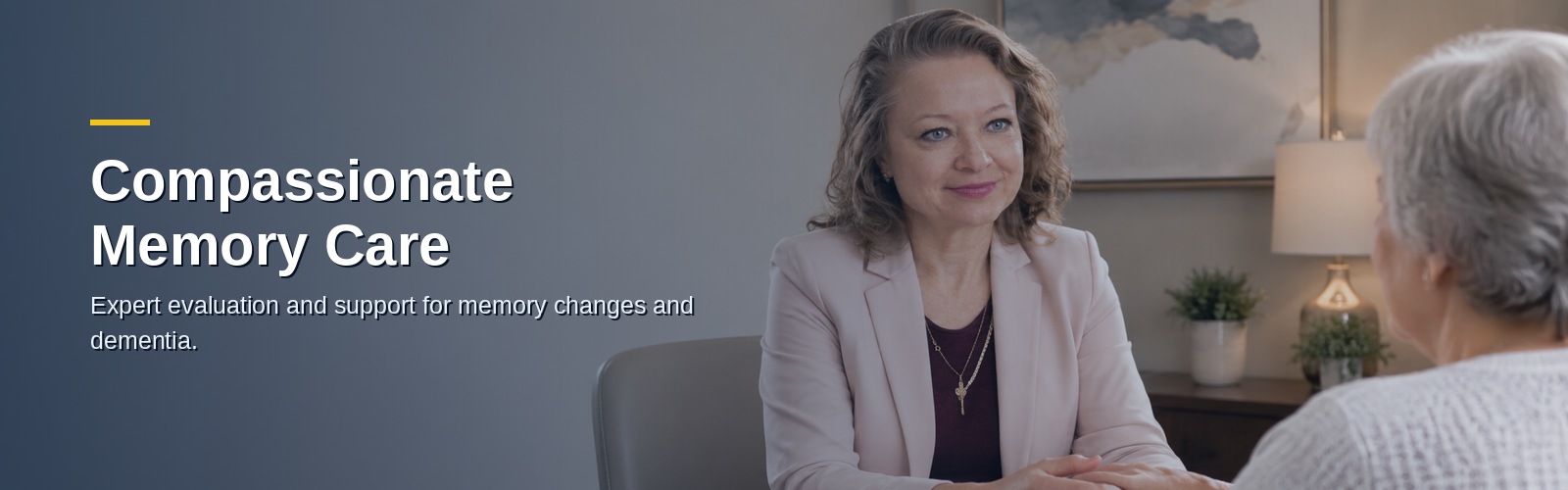
Noticing changes in memory or thinking, whether in yourself or someone you love, can be frightening. Not every memory change means dementia, and getting a clear evaluation is the first step toward understanding what is happening and what can help.
Our neurologists provide thoughtful, comprehensive care for memory concerns and dementia, supporting both patients and their families with clarity, compassion, and a plan.
Understanding Dementia
Dementia is not a single disease but a term for a group of symptoms that can affect memory, thinking, language, and the ability to manage everyday tasks. Alzheimer's disease is the most common form, but there are others, including vascular dementia, Lewy body dementia, and frontotemporal dementia.
It is also true that many memory changes are caused by conditions other than dementia, some of which are treatable. That is why a careful evaluation matters so much: it helps identify what is really going on before assumptions are made.
Signs Worth Evaluating
It can be hard to know when memory changes are worth looking into. Some signs that a professional evaluation may help include:
Memory loss that disrupts daily life
Difficulty finding words or following conversations
Confusion with time, places, or familiar tasks
Changes in mood, personality, or judgment
If any of these feel familiar, reaching out is a good next step. An evaluation can bring answers and peace of mind.

How We Evaluate Memory Concerns
History & Exam
A thorough review of your history and medications, along with a neurological and mental status exam by a neurologist.
Cognitive Testing
When helpful, cognitive and neuropsychological testing gives a clearer picture of memory and thinking.
Additional Testing
Lab work, brain imaging, or an EEG may be used to identify or rule out specific causes.
Part of what makes an evaluation valuable is identifying treatable causes of memory change, so nothing is assumed before the full picture is understood.

Our Approach to Care
There is no cure for most forms of dementia, but that does not mean there is nothing to be done. Early diagnosis and thoughtful care can help manage symptoms, support quality of life, and give families time to plan and prepare.
We build each care plan around the individual, drawing on medication when appropriate along with lifestyle-based approaches like cognitive activity, exercise, and routine. Because we bring neurology, psychiatry, and therapy together under one practice, we can also support related concerns such as mood, sleep, and behavioral changes.
Support for Families and Caregivers
A memory diagnosis affects the whole family, not just the patient. We know how much caregivers carry, and we see supporting you as part of caring for your loved one.
Throughout your care, we take time to explain what is happening, answer questions, and help you understand what to expect, so you can make informed decisions together and feel less alone in the process.
Why Choose A Ray of Hope
Experienced, board-certified neurologists
Comprehensive memory evaluations and on-site testing
Personalized care plans built around the individual
Neurology, psychiatry, and therapy under one practice
Compassionate support for patients and families

Getting Started
Our memory and dementia care is available across all three of our locations. If you would like to confirm which office is nearest you, give us a call and we can help.
If you or someone you love is noticing changes in memory or thinking, the best next step is a conversation with one of our providers.

© 2026 A Ray of Hope Neurology and Psychiatry. All rights Reserved - Accessibility Statement - Privacy Policy - Sitemap
Managed and Designed by 

NOW ACCEPTING NEW PATIENTS
Child and Adolescent Psychiatry
Board certified child psychiatrist with appointment openings now!
Call (847) 816-6335 Meet Christian Schmidt, MD