What Does an EEG Show? What an EEG Test Can Detect and When You May Need One
If your doctor has recommended an EEG test, you're probably wondering what it can actually reveal. An electroencephalogram (EEG) records the brain's electrical activity, helping neurologists identify abnormal brain wave patterns associated with conditions such as epilepsy, seizures, sleep disorders, encephalopathy, and other neurological disorders.
Unlike an MRI or CT scan, which show the brain's structure, an EEG brain test measures how the brain is functioning in real time. At A Ray of Hope Neurology and Psychiatry, neurological evaluations and diagnostic testing are part of a comprehensive approach to understanding symptoms affecting the brain and nervous system. (Bansal Neuro)
For many people, that distinction isn't immediately obvious. Brain scans produce images. An EEG produces information. Instead of looking for structural changes, it listens to the electrical signals that allow billions of neurons to communicate every second.
When Is an EEG Test Recommended?
Neurological symptoms aren't always straightforward. The same symptom can have several possible causes, and many conditions produce similar signs.
Your neurologist may recommend an EEG test if you're experiencing:
Unexplained seizures
Sudden loss of consciousness
Repeated fainting episodes
Unusual staring spells
Temporary confusion or memory lapses
Episodes of involuntary movements
Sleep-related neurological events
Changes in awareness or behavior without a clear cause
These symptoms may require evaluation by a specialist. A consultation with a neurologist can help determine whether additional testing, including an EEG, may be appropriate. (Bansal Neuro)
What Does an EEG Detect?
People often expect a simple answer, but the reality is more nuanced.
An EEG doesn't detect every neurological disorder. Instead, it identifies changes in electrical activity that help neurologists narrow down possible causes of symptoms.
Epilepsy and Seizure Disorders
This is one of the most common reasons for performing an EEG. Even if a seizure doesn't occur during the recording, abnormal electrical discharges may suggest a tendency toward seizures or help classify different types of epilepsy.
For patients experiencing seizures, blackouts, or unexplained episodes of altered awareness, specialized evaluation through seizure and epilepsy care may help guide the next steps in diagnosis and management. (Bansal Neuro)
EEG vs MRI: What's the Difference?
One of the most common misconceptions is that an EEG and an MRI perform the same job. They don't.
Because these tests provide different information, neurologists may use EEG alongside other diagnostic approaches when evaluating neurological symptoms.
At A Ray of Hope, neurological diagnostic services include evaluations for conditions such as seizures and other neurological disorders, helping patients receive a more complete assessment. (Bansal Neuro)
What Happens During an EEG Brain Test?
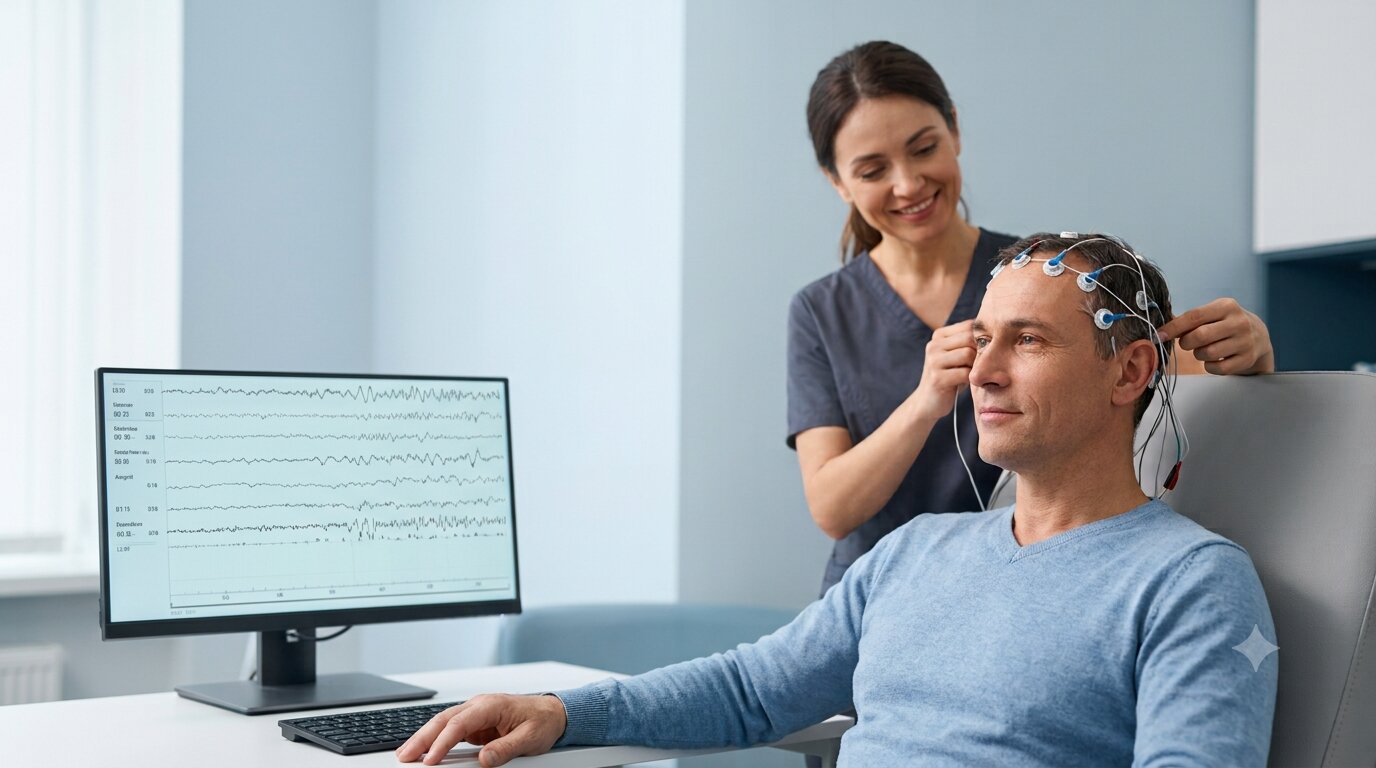
For many patients, the idea of having a test that measures brain activity can sound complicated or uncomfortable. In reality, an EEG brain test is a simple, painless, and non-invasive procedure that usually requires very little preparation.
During the test, small electrodes are gently placed on the scalp using a special adhesive or a soft cap. These electrodes do not send electricity into the brain. They only record the natural electrical signals produced by brain cells and transmit them to the EEG machine for analysis.
Once the recording begins, you will typically sit or lie comfortably while your brain activity is monitored. The technician may ask you to perform certain activities that can help reveal different brain wave patterns, such as:
Opening and closing your eyes
Taking deep breaths for a short period
Looking at flashing lights
Relaxing quietly
Falling asleep, if a sleep EEG is being performed
A routine EEG test usually takes around 20 to 60 minutes, depending on the type of recording required. In some cases, neurologists may recommend longer monitoring, including overnight or extended EEG testing, especially when symptoms occur only occasionally and need to be captured during the recording.
Before the appointment, your healthcare provider may provide specific instructions. These may include washing your hair before the test, avoiding hair products such as oils or gels, and following medication instructions carefully. If a sleep-deprived EEG is planned, you may be asked to reduce your sleep beforehand to increase the likelihood of recording specific brain activity patterns.
Although the test records electrical signals from the brain, you will not feel the activity being measured. The process is designed to observe how your brain functions naturally, helping your neurologist better understand symptoms and decide what steps may be needed next.
Why Neurologists Still Use EEG Testing
Modern neurological care combines clinical experience with advanced diagnostic tools. EEG remains valuable because it provides information that imaging tests cannot: insight into the brain's electrical function.
For patients dealing with unexplained seizures, blackouts, sleep-related events, or other neurological concerns, an EEG can help neurologists better understand what is happening and determine the next appropriate step.
Working with an experienced neurology team, such as the specialists at A Ray of Hope Neurology and Psychiatry providers, allows test results to be interpreted alongside symptoms, medical history, and other findings. (Bansal Neuro)
© 2026 A Ray of Hope Neurology and Psychiatry. All rights Reserved - Accessibility Statement - Privacy Policy - Sitemap
Managed and Designed by 

NOW ACCEPTING NEW PATIENTS
Child and Adolescent Psychiatry
Board-certified child psychiatrist with appointment openings now!
Call (847) 816-6335 Meet Christian Schmidt, MD