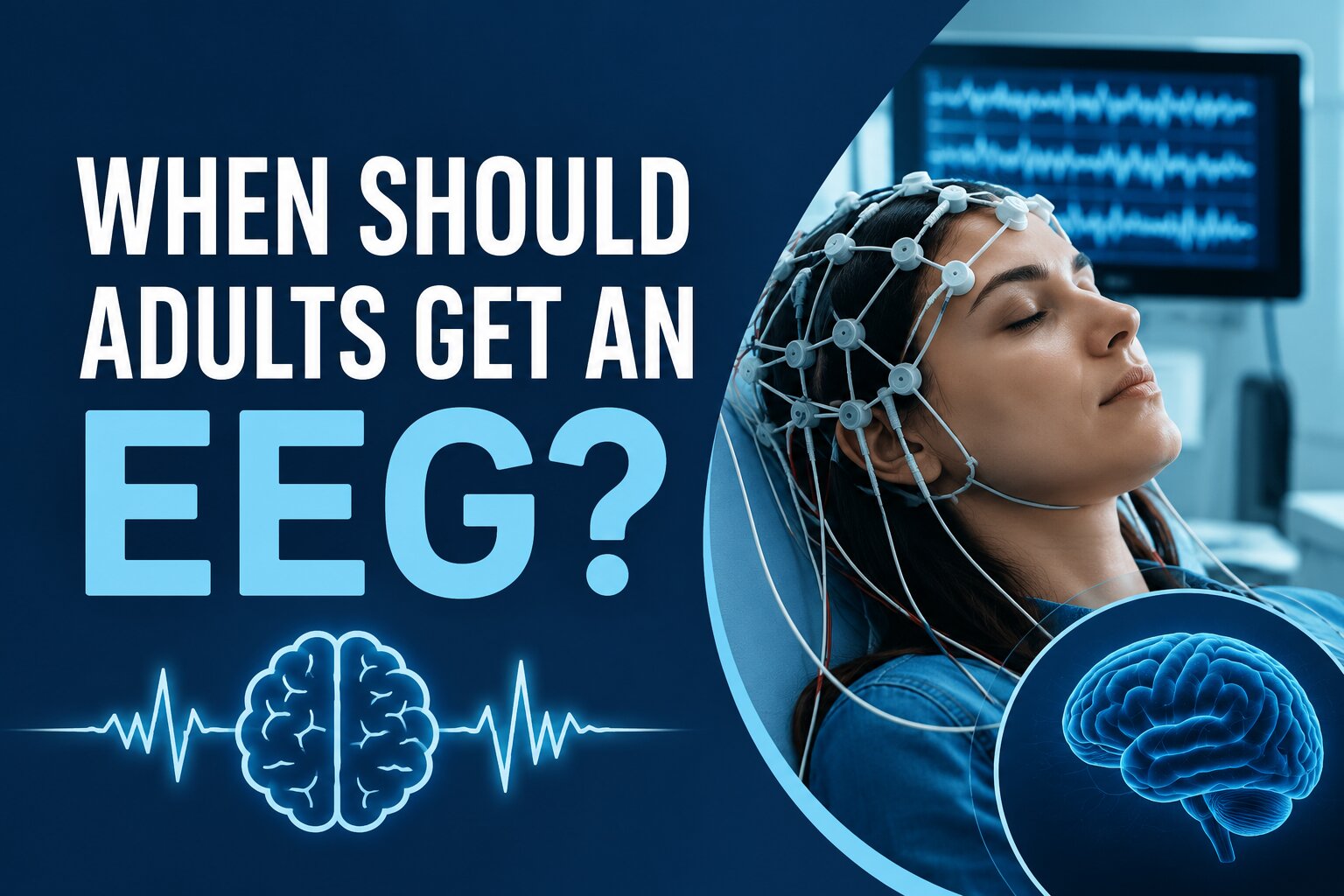
When Should Adults Get an EEG? Signs, Symptoms & Benefits
A headache after a long day, an occasional lapse in memory, or a brief dizzy spell doesn't automatically point to a neurological disorder. But some symptoms deserve a closer look, especially when they happen repeatedly, appear without an obvious cause, or affect your ability to function normally.
One of the tools neurologists use to better understand what's happening inside the brain is an electroencephalogram (EEG). Despite its association with epilepsy, an EEG test for adults is used in a much wider range of situations. It helps physicians evaluate the brain's electrical activity and can provide valuable clues when symptoms don't have an obvious explanation.
If you've ever wondered when adults should get an EEG, the answer depends less on age and more on the symptoms, medical history, and clinical evaluation.
What Is an Electroencephalogram (EEG)?
An electroencephalogram (EEG) is a non-invasive diagnostic test that records the brain's electrical activity. Small sensors, called electrodes, are placed on the scalp to detect brain wave patterns.
Unlike MRI or CT scans, which show the brain's structure, an EEG focuses on how the brain is functioning in real time. This distinction makes it especially useful for identifying abnormal electrical activity that may not be visible on imaging studies.
The test is painless, does not send electricity into the brain, and is typically performed in an outpatient setting.
When Should Adults Get an EEG?
There isn't a single symptom that automatically means you need an EEG. Instead, neurologists recommend the test when a person's symptoms suggest that abnormal brain activity could be contributing to their condition.
Here are some of the most common reasons an adult EEG test may be recommended.
Unexplained Seizures or Suspected Epilepsy
One of the primary reasons for an EEG for seizures is to evaluate episodes that may represent epilepsy or another seizure disorder.
Not every seizure involves dramatic convulsions. Some people experience brief staring spells, sudden confusion, involuntary movements, or temporary lapses in awareness that can easily be mistaken for fatigue or distraction.
An EEG can help identify abnormal electrical patterns that support an epilepsy diagnosis, although a normal EEG does not completely rule out seizure disorders.
Recurrent Episodes of Loss of Consciousness
Passing out isn't always related to heart problems or dehydration.
When episodes of fainting or blackouts occur repeatedly without a clear explanation, a neurologist may recommend an EEG as part of a broader neurological evaluation. The goal is to determine whether the events are related to abnormal brain activity or another underlying condition.
Sudden Changes in Awareness or Memory
Short periods of confusion, memory gaps, or moments when someone becomes temporarily unresponsive deserve medical attention, particularly if they happen more than once.
These episodes can have several possible causes. An EEG may help determine whether seizure activity is contributing to the symptoms.
Unusual Movements During Sleep
Some neurological conditions become apparent only during sleep.
Adults who experience repeated jerking movements, unexplained nighttime behaviors, or suspected nocturnal seizures may benefit from specialized EEG monitoring, including sleep-deprivation or overnight EEG studies.
After a Brain Injury
Following a concussion or traumatic brain injury, most people recover without requiring an EEG. However, if seizures, altered consciousness, or unexplained neurological symptoms develop afterward, an EEG may become part of the diagnostic evaluation.
Monitoring Certain Neurological Conditions
For individuals already diagnosed with epilepsy or other neurological disorders, repeat EEG testing can help monitor changes in brain activity, assess treatment response, or guide future care decisions.
Symptoms That May Prompt a Neurologist to Recommend an EEG
Because many neurological symptoms overlap with other medical conditions, an EEG is never ordered based on a single complaint alone.
However, your physician may consider a neurologist EEG evaluation if you experience:
Recurrent seizures
Sudden blackouts
Episodes of unexplained confusion
Temporary loss of awareness
Frequent staring spells
Memory lapses without an obvious cause
Unexplained muscle jerking
Abnormal movements during sleep
Suspected nocturnal seizures
Changes in behavior associated with altered consciousness
Each symptom is evaluated alongside your medical history, physical examination, and, when appropriate, additional diagnostic testing.
What Can an EEG Help Diagnose?
Although often referred to as a brain wave test, an EEG does much more than simply record electrical signals.
Depending on the clinical situation, it may help evaluate or support the diagnosis of:
Epilepsy and seizure disorders
Certain sleep-related neurological conditions
Encephalopathy (changes in brain function caused by illness or injury)
Brain inflammation or infections affecting brain activity
Altered mental status
Some complications following stroke or traumatic brain injury
It's important to understand that EEG diagnosis is rarely based on the test alone. Neurologists interpret EEG findings together with symptoms, examination findings, imaging studies, and other diagnostic information.
What Happens During an EEG Procedure?
Many patients are surprised by how straightforward the EEG procedure actually is.
A technician places small electrodes on your scalp using a conductive gel or adhesive. These electrodes record the brain's natural electrical signals while you rest comfortably.
Depending on the reason for testing, you may be asked to:
Open and close your eyes
Breathe deeply for a short period
Look at flashing lights
Try to fall asleep during the recording
A routine EEG usually takes between 20 and 60 minutes, although longer or overnight monitoring may be recommended for certain conditions.
The test itself is painless and does not expose you to radiation.
How to Prepare for an EEG Test
Preparation instructions may vary depending on the type of EEG your neurologist recommends, but general guidelines often include:
Wash your hair before the appointment.
Avoid hair sprays, oils, or styling products.
Continue medications unless your physician instructs otherwise.
Follow any instructions regarding sleep if a sleep-deprived EEG is scheduled.
Limit caffeine if advised before the test.
Following these recommendations helps improve the quality of the recording.
Understanding the Benefits of an EEG
One of the biggest EEG test benefits is that it provides information about brain function that imaging tests cannot.
An EEG may help:
Detect abnormal brain wave activity
Support the diagnosis of epilepsy and seizure disorders
Distinguish neurological events from non-neurological causes
Guide treatment planning
Monitor disease progression or response to therapy
Provide additional information when symptoms remain unexplained
While an EEG doesn't diagnose every neurological condition, it is an important part of a comprehensive neurological assessment.
Common Misconceptions About EEG Testing
"EEGs are only for people with epilepsy."
Epilepsy is one of the most common reasons for EEG testing, but it's far from the only one. Neurologists also use EEGs when evaluating unexplained episodes of altered consciousness, certain sleep disorders, and other conditions affecting brain function.
"A normal EEG means nothing is wrong."
Not necessarily.
Some neurological conditions may not produce abnormal electrical activity during the recording. That's why neurologists interpret EEG results in the context of a patient's symptoms and medical history rather than relying on the test alone.
"The test is painful."
An EEG records electrical activity but does not send electricity into the body. Most patients find the procedure comfortable and well tolerated.
When Should You See a Neurologist?
Persistent neurological symptoms should never be ignored simply because they occur infrequently.
If you've experienced unexplained seizures, repeated fainting episodes, sudden confusion, memory lapses, or periods of altered awareness, consulting a neurologist can help determine whether additional evaluation, including an EEG, is appropriate.
Early assessment doesn't always lead to a serious diagnosis. In many cases, it provides reassurance or helps identify treatable conditions before symptoms become more disruptive.
For people experiencing unexplained neurological symptoms, the most important question isn't simply "Do I need an EEG?" It's "What is causing these symptoms?" An EEG is one of several tools neurologists use to answer that question accurately, ensuring that any treatment decisions are based on a complete clinical picture rather than assumptions.
If you or someone you know has experienced unexplained seizures, blackouts, memory lapses, episodes of confusion, or other neurological symptoms, don't wait for them to become more frequent or disruptive. An evaluation by a neurologist can help determine whether an EEG test for adults or other diagnostic testing is appropriate based on your symptoms and medical history.
The specialists at A Ray of Hope Neurology and Psychiatry provide comprehensive neurological evaluations and personalized care to help identify the underlying cause of your symptoms and guide the next steps in your treatment.
Ready to speak with a neurologist? Visit our Contact page to request an appointment or get in touch with our team.
© 2026 A Ray of Hope Neurology and Psychiatry. All rights Reserved - Accessibility Statement - Privacy Policy - Sitemap
Managed and Designed by 

NOW ACCEPTING NEW PATIENTS
Child and Adolescent Psychiatry
Board-certified child psychiatrist with appointment openings now!
Call (847) 816-6335 Meet Christian Schmidt, MD